OGA AGM Weekend 2026 - Actvities
OGA AGM 2026 > Activities
Read about the Harwich History, Radio Light Vessel and Lifeboat Station tours and Claudia Myatt's Sketchbook Sailor talk below.

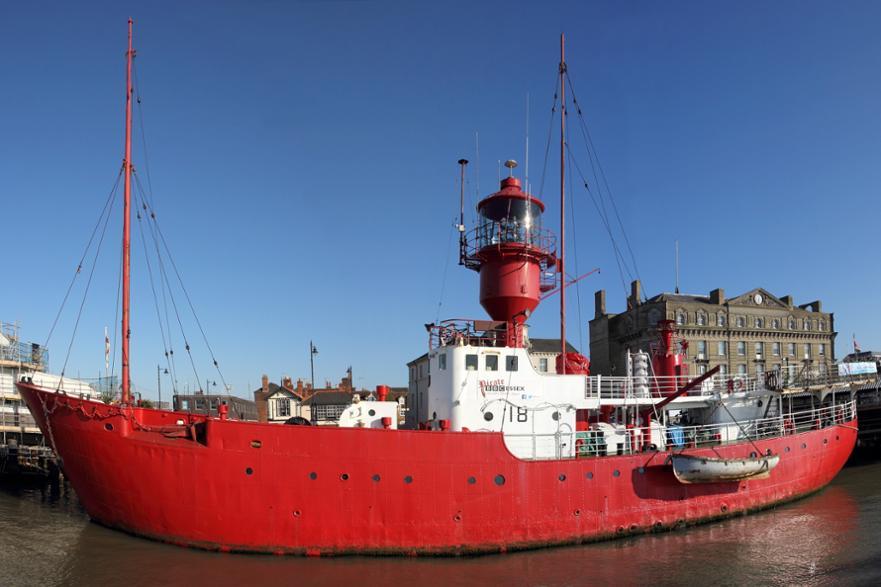
Radio 'Mi Amigo' Light Vessel LV18 Tour
Saturday 31st January - 9.30am and 11am
RNLI Station and Severn Lifeboat Tour
Saturday 31st January - 9.30am and 11am

On this tour you will step aboard, explore her original layout, machinery, lantern and crew quarters, and gain a sense of what life was like for lightship crew on long patrols at sea. After decommissioning in 1994, the vessel was restored and opened as part of Harwich’s maritime heritage.
From the deck you also have excellent views across the harbour and coastline, a fine vantage point for ship- and boat-spotting.
Recently LV18 has become the home of Radio Mi Amigo.
- LV18 was built in 1956 by Philip & Son of Dartmouth and entered service in 1958.
- She was one of the final manned lightvessels commissioned, and incorporated safety improvements (e.g. watertight compartments, escape via lantern tube) after the tragic Goodwin Sands loss of 1954. nationalhistoricships.org.uk
- LV18 served on multiple lightship stations until decommissioning in 1994.
- In 2002 she was purchased by The Pharos Trust, restored, and moored on Harwich Quay as part of the Harwich Quayside Regeneration.
- As a museum, she offers a rare insight into offshore navigational aids and the life aboard a ship permanently stationed at sea.
(Image:Helmut Seger, CC BY-SA 4.0 <https://creativecommons.org/licenses/by-sa/4.0>, via Wikimedia Commons)
The RNLI Harwich lifeboat station was established in 1878. A lifeboat service had been established previously in 1821, by the Essex Lifeboat Association, but this closed in 1843. The RNLI station was commandeered by the Admiralty in 1917, for patrol duties and did not re-open until the mid 1960s.
You'll be guided through the lifeboat station and, weather and safety permitting, board or view the current Severn class lifeboat. You’ll hear stories of harrowing rescues, challenges of operating in severe weather, and the evolution of lifeboat technology.
Of note: in January 1881, a previous Harwich lifeboat was rowed over eight hours and towed four further miles through freezing conditions to rescue the steamer Ingerid on the Sunk Sand, a mission for which the coxswain and crew were awarded Silver Medals. RNLI
(Image: Harwich Lifeboat Station by N Chadwick, CC BY-SA 2.0 <https://creativecommons.org/licenses/by-sa/2.0>, via Wikimedia Commons)
Harwich Historic Walking Tour
Saturday 31st January - 9.30am and 11am

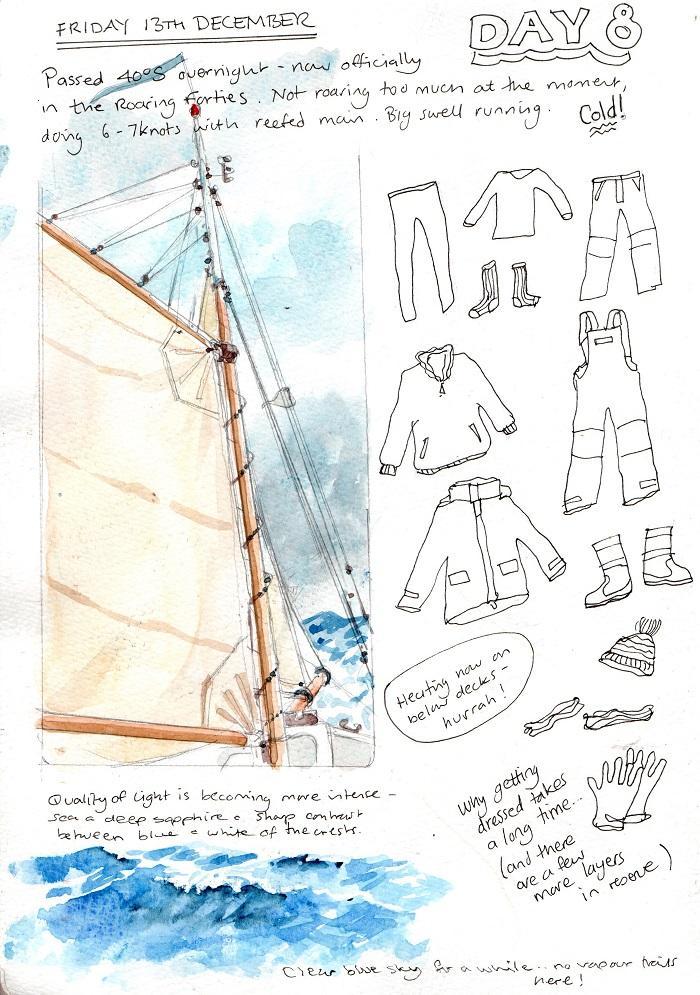
Sketchbook Sailor with Claudia Myatt
Sunday 1st February - 10.30am

The Harwich Society will be our guides for a walk through Harwich uncovering the layers of history built into its streets and waterfront. The Harwich Society have thirty years of experience in organizing these tours - let the experts be your guide. The town’s layout follows a medieval grid, established in the 13th century under the Earl of Norfolk, taking advantage of its position at the mouth of the Stour and Orwell estuaries.
The route will be chosen on the day but could include any of the following:
- The Treadwheel Crane, a remarkable survivor from about 1667, originally located near the Navy Yard, now prominently displayed on Harwich Green.
- Lighthouse pair (High and Low Lighthouses) built in 1818, which once served as leading lights into the harbour; though decommissioned in 1863, they remain intriguing landmarks. The Low Lighthouse houses the Harwich Museum.
- Lifeboat Museum - housed in the first Harwich lifeboat station (built 1876), the Museum tells the story of the Lifeboat Service in Harwich since 1821.
- Navyard Wharf - this is the site of the naval shipyard and includes a list of the Men of War built there betweeb 1860 and 1827.
- Light vessel LV18 - built in 1956, the LV18 was the last manned Trinity House Light Vessel in service and is now a floating museum and radio station.
- Ha'penny Pier - The Ha’penny Pier built in 1852-1853 as the ticket office and waiting room for the first continental ferries.
- Trinity House Depot -Trinity House have been in Harwich since 1812. THV Patricia is a common aspect of the Harwich foreshore.
- Christopher Jones' House - This is the family home of the master of the Mayflower.
- Old Customs House - in use from about 1795 to 1935.
- St Nicholas Church - rebuilt 1821, has memorials from earlier church to naval men, an unexploded bomb of World War 1 and a collection of 17th century Dutch tiles.
- The Redoubt - built in 1808 as large circular fort to protect the harbour from a Napoleonic invasion. Originally armed with ten guns surrounded by a deep moat.
- Bathside Battery - built in 1811 to protect the west side of the town against the Napoleonic threat. Originally armed with three 24-pounder cannon’s.
- Radar Tower - one of the earliest radar installations built in 1941, Still contains original scanners. It is part of the scheduled ancient monument complex of Beacon Hill.
- The Guildhall (Church Street), the centre of local government (the current town council traces its roots back through Harwich Borough Council).
- The Mural - this is a wall painting depicting aspects of Harwich's history painted by the Harwich School, commissioned by the Harwich Society.
- The Electric Palace Cinema, one of the oldest purpose-built cinemas in the UK, opened in 1911, with much original interior and projection equipment preserved.
- Time and Tide Bell - part of a project made up of bells, designed by UK sculptor Marcus Vergette and Australian bell designer Neil McLachlan. There are installations around the UK, invoking the connections between local communities, the impact of climate change and living with the sea.
Feel free to ask the guide any questions along the way.
You can see a map and read a little about each location on the Harwich Society website.
(Image: Harwich Maritime Museum by Glyn Baker, CC BY-SA 2.0 <https://creativecommons.org/licenses/by-sa/2.0>, via Wikimedia Commons)
Marine artist Claudia Myatt has sailed gaffers in some unusual places, including the Arctic and Southern Ocean. She sketched her way around Cape Horn in a gaff ketch, taking her paintbox but no camera on her two month voyage. She also spent time as artist in residence to South Georgia and Antarctica. She believes that sketching is for everyone, not just for 'artists', and it’s a great way to make lasting memories of your voyaging, whether ocean crossing or close to home. Join us for a talk and a fascinating browse through Claudia’s sketchbooks, along with practical tips and demonstration of how to sketch afloat.
View a taster of a 'Sketchbook Log' from Claudia's website: https://www.youtube.com/watch?v=wIQ8qHMi6Y0 .
And check out Claudia's artwork, projects and blog on her website at www.claudiamyatt.co.uk
The talk will be given in the 'hold' of the D-Day Landing Barge Kitchen LBK6 which is now a clubhouse at Harwich and Dovercourt Sailing Club. CombinedOps.com LBK6