Technical help!
Welcome to the technical page where we share hints and tips on all things gaffer related. We are starting with hull work and with support from Teamac who will help us identify problematic areas and how to deal with them too! If you have any questions, please do not hesitate to ask Elly Howlett who will answer your query as soon as possible and publish for others to see too!
Varnishes vs Oils
Huge thanks to Teamac for their ongoing advice and support!

|
Varnishes vs Oils | [pdf 119KB] |

|
Single Pack vs 2 Pack
Huge thanks to Teamac for their ongoing advice and support!
|
|
Single pack vs 2 pack 2021 PDF | [pdf 117KB] |
|
Technical Live with Teamac
Pre-Antifouling Considerations
For all types of hull, including wooden, GRP, metal and ferro concrete hulls. We have tried to list some of the problems which need to be overcome on hulls and structures exposed to the marine environment, either before or when applying antifouling.
WOODEN HULLS: WOODWORM THE HIDDEN MENACE
Because wood is a link in nature’s life cycle certain biological organisms attack and devour it. Their food comes from the cell wall content, either cellulose or lignin, or both, the same elements that give wood its strength.
• Cellulose – Tensile Strength
• Lignin – Compression Strength
There are two principal menaces to the hulls of wooden boats operated in British waters – marine borers and fouling organisms.


Biological, wood destroying organism No.1: The Gribble
There are a number of Crustacea which habitually bore into wood. One type stands out pre-eminent on account of its ubiquity and the great damage done. These are the gribble, species of Limnoria, little creatures resembling miniature wood lice, usually between 3 and 4 millimetres long and with a semi-cylindrical body divided into segments. They have 7 pairs of short legs each ending with a sharp curved claw by means of which the animal holds onto the sides of the burrow. Beneath the hind end of the body there are 5 pairs of legs each carrying 2 broad plates which act as gills, these keep up a continuous movement during the life of the animal.
The gribble is recognised as a cold-water species which does not seem to survive for long if temperatures exceed 20 ºC.
Usually, one pair of Limnoria live together in a tunnel, the male following the female. The tunnels cross each other and as a result of extensive attack the timber surfaces are reduced to a sponge like appearance. They rarely bore deeper than 15mm below the surface of the wood but the entire surface may become infested. The erosive action of the sea on a surface thus weakened exposes fresh surfaces to attack, which is therefore continuous. The attack usually extends from a centre of infestation, as the young are unable to swim and the adults can only do so to a limited extent. The adult female lays 20 to 30 eggs which when hatched allow the young to burrow out from the sides of the tunnel made by the adults.
It has been known that 1sq. inch could contain 300 to 400 borers. The gribble will always make its first attack on new untreated timber.
The gribble can only exist in water with a salinity exceeding 16 – 20 parts per 1000 and can withstand daily exposure to air and thus survives in inter-tidal areas. The effect of moving a boat into fresh water for a sufficiently long period would be enough to kill the borers, although it would still be liable to fresh attack on its return to the sea. It is not known exactly how long timber must be out of saline water to kill marine borers but has been known that some species of shipworm can survive for 30 to 40 days. No species of timber in its natural condition is immune from the attack of marine borers but some have more resistant heartwood. Many timbers are readily attacked and can be totally destroyed within a very short time.
Biological, Wood destroying organisms No.2: Teredo
A borer which may attack your boat’s hull is the Teredo shipworm, of which at least three species are to be found in British waters. The free-swimming larvae of this worm attach themselves to unprotected areas of wooden hulls and then turn into bivalve molluscs. In this form they bore into the wood – through holes often no bigger than a pin’s head – and then they start to become worm-shaped.
In the form of worms with cutting teeth in their shell-like heads, they continue to bore straight in for a bit and then, as they begin to grow, they turn at right angles to the surface and bore with the grain. They continue to grow as they feed on the cellulose in the wood and worms of up to nine inches in British waters and up to six feet in tropical waters have been found inside planks with nothing larger than pinholes on the surface to show where they had entered.

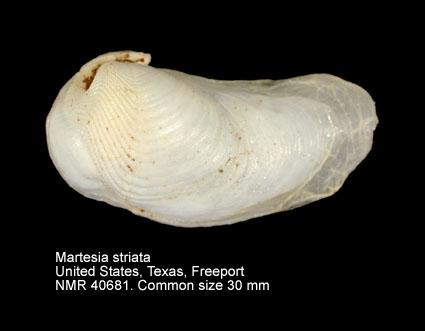
Biological, Wood destroying organisms No.3: Martesia
It is possible that your boat might be attached by molluscs called Martesia which are often found in localities where Teredo worms are prevalent. Martesia resemble elongated cockles, rather than worms, and do not bore into planking like Teredos but excavate burrows on the surface. They are not therefore such a hidden menace but, since they can grow to a length of two inches and a breadth of over half an inch while excavating burrows longer than themselves, they are a very definite one; the more so as they attack in large numbers.
What Teamac would recommend should you not be alone onboard...
Boat already infected
• All badly effected timber to be renewed.
• The under-water bottom - have all the old coatings removed by scraping in
co-ordination with a suitable remover or a belt sander works well (ideally done as a wet process to prevent dust being inhaled. Always wear a mask).
• Fresh water hosing and scrubbing to remove all traces of salt.
• All timber to be treated with wood preservative. Apply liberally and allow to dry. Several treatments are better than one.
• Two full coats of Teamac Metaclor Underwater Primer.
• Two full coats of the selected Teamac antifouling product.
Preventative measures for boats not yet infected
Steam cleaning of all underwater areas. Alternatively a good fresh water hosing and scrubbing followed by careful spot priming in Metaclor and two full coats of antifouling (exposed timber should be pretreated with wood preservative). Continually touch up with antifouling in places subject to mechanical damage.
Boats using bases where infestation is known to exist, to be out of water every six months – cleaned and given one coat of Metaclor followed by 2 coats of antifouling (exposed timber should be treated carefully with wood preservative).
Specification for new building
• Selected timber completely free of all sapwood.
• Better use of timbers known to be resistant to marine borers.
• Deep impregnation with preservative wherever possible.
• Continuous application of preservative to surface areas and timber faces exposed when fitting.
• Timber exposed when drilling fastening holes to be thoroughly soaked with preservative.
• Underwater area to be given 2 coats of Metaclor Underwater Primer followed by 1 or 2 coats of the selected antifouling.
It is most important that areas subject to mechanical damage are touched up regularly with Antifouling Composition.
Fouling to all types of hull
Sea water in harbours and estuaries contains immense numbers of microscopic organisms and plants collectively known as plankton. If given a chance, many of these will settle on the hull of a boat and grow. They constitute a menace because, as they grow, they increasingly reduce the boats speed through the water and its manoeuvrability, and are a direct cause of increased fuel consumption. A hull laden with fouling also presents the serious risk of the transfer of invasive plant & animal species from one region or country, to another, and is yet another solid reason why applying a good quality antifoul is an important consideration for all boat owners.
The greatest menace among fouling organisms is the barnacle which can grow until it measures 3 inches across the base. Other animal shell growths include mussels and sepulidae. The latter form masses of coiled and tangled white shelly tubes, often described as “coral”.
Other growths are formed by ascidians or tunicates which, at the larval stage, resemble minute tadpoles. They are usually called jelly-bags or sea squirts. Yet others are formed by polyzoa, sometimes in the form of mats to which other organisms may attach themselves; and by hydroids. Those formed by the latter are scientifically known as tubulana, colloquially as roses. Weed growths include a green ribbon grass known as entermorpha; a brown weed called ectocarpus; and a red one called polisiphonia. They are distantly related to a slimy, moss like growth likely to be composed of vegetable growths and seaweed related organisms called diatoms. The slime may not adversely affect a boat’s speed much but weeds certainly do.
Antifouling & Aluminium Hulls
Aluminium has been used in boat building because it is strong for its weight and is relatively easy to work. However it has proved prone to oxidisation and then structural breakdown. In addition, it is important to prevent contact between cuprous oxide (present in many antifoulings) and the aluminium. There can be a reaction between the ‘salts’ of copper and the aluminium metal resulting in further breakdown of the aluminium surface. Always use an antifouling described as suitable for aluminium. This is known as A Plus in the Teamac range.

Other considerations
Osmosis in GRP Hulls.
Osmosis is caused by the absorption of water into “impurity salts” persistent in the materials which make up the glass fibre hulls. This causes “Blisters” to appear in the hull as water pressure pushes on the Gelcoat from underneath.
Although small areas can be treated, once blisters are present throughout the hull, complete replacement of the gelcoat is recommended. A specialist should be consulted. (Teamac Antifouling paints can help act as a barrier to protect your hull).
Rust in Steel Hulls
Rust must be fully removed from steel hulled boats before priming. Once present, iron oxide will continue to break the structure of the hull until removed.
Efflorescence in Ferro Concrete Hulls
This is the formation of salts resulting in the breakdown of the structure of the Ferro Concrete hull. The best way to treat this is to clean away the source and provide a barrier to protect the hull inside and out.
Compatibility and Testing
In an ideal world all old antifouling should be removed back to a firm substrate. This is not always practical and more often than not, the selected Teamac antifouling will be applied directly over many types of products with no problems experienced.
An application of antifoul to a small area first is always a good idea to ensure compatibility. Leave the “Test Area” overnight and examine it carefully the next day. With any sign of reaction (i.e. blistering, splintering or flaking, colour inconsistency etc.) a suitable barrier coat must be applied, or all the old antifouling be removed.